Your definitive guide to Botswana’s seasons, so every game drive, mokoro glide, and sundowner lands at exactly the right moment.
Key Takeaways
- The dry season (May to October) is the best time for big-game viewing, with wildlife concentrated around water sources and the Okavango Delta in full flood.
- The green season (November to April) offers lush landscapes, exceptional birdwatching, calving season, and significantly lower rates.
- Many seasoned safari-goers regard April and May as Botswana’s sweet spot: game viewing at its finest, before the peak-season crowds descend.
- June to August is peak season: Okavango floodwaters are at their highest, visibility is excellent, and predator activity is at its most intense.
- Botswana rewards travel in every month; the right timing depends on what experience you’re seeking.
Why Timing Your Botswana Safari Matters
Few destinations on earth are as sensitive to the rhythm of the seasons as Botswana. Knowing the best time to visit Botswana for safari is the single most important decision in planning your trip. The difference between arriving in June versus January is not merely a matter of weather; it can mean the difference between witnessing the largest elephant herds on the continent gathered at a single waterhole or exploring a vivid emerald delta alive with newborn impalas and hundreds of migrant birds. Knowing the best time to travel to Botswana for a safari is the foundation of any well-planned wilderness journey.
This guide breaks down Botswana’s two primary seasons month by month, covering wildlife activity, weather, water levels in the Okavango Delta, and what each period offers the discerning traveller. Whether you seek the drama of the dry season or the quiet magic of the green months, Botswana delivers, provided your timing is right.
New to planning a Botswana trip? Start with our Botswana Safari: The Ultimate Guide for Luxury Travel, a complete introduction to the destinations, experiences, and lodges that make this one of Africa’s most compelling safari countries.
Botswana’s Two Seasons at a Glance
Botswana’s safari experience is shaped by two defining seasons: the wet (green) season from November through to April, and the dry (winter) season from May through to October. Each creates an entirely different landscape, a different cast of wildlife characters, and a different atmosphere in camp.
| Season / Months | Temperature | Vegetation | Highlights |
|---|---|---|---|
| Nov–Apr (Green Season) | Warm & wet (25–38°C) | Lush; dense | Excellent birding, calving, zebra migration, lower prices |
| Apr–May (Shoulder) | Mild & dry (15–28°C) | Thinning | Great sightings, fewer crowds, competitive rates |
| May–Oct (Dry / Peak) | Cool to warm (5–35°C) | Sparse | Best big-game viewing, Okavango flooding, mokoro safaris |
| Jun–Aug (Peak) | Crisp days, cold nights (5–26°C) | Sparse | Highest wildlife concentration, full Okavango flood |
| Sep–Oct (Late Dry) | Hot (25–38°C) | Very sparse | Intense game viewing at waterholes, large elephant herds |
Cheetah Coalition – Qorokwe Camp, Botswana – Chase Wells
The Dry Season (May to October): Prime Safari Time
The dry season is universally regarded as the best time to visit Botswana for a safari. As the rains recede, vegetation thins and water sources shrink to rivers, lagoons, and permanent waterholes. Wildlife has no choice but to congregate, and the result is some of the most spectacular game viewing on the African continent.
Clear skies, low humidity (typically 20–40%), and comfortable daytime temperatures between 22°C and 35°C make conditions ideal for long game drives and walking safaris. Mornings and evenings are cool, particularly in June and July when temperatures can fall below freezing overnight, so pack a fleece for dawn departures.
May: The Insider’s Favourite
Seasoned safari-goers frequently point to May as the single best month for game viewing in Botswana, better, in the opinion of many, than the more celebrated July and August. The landscape is still lightly tinged with green, temperatures are mild (around 10°C at dawn, 28°C by afternoon), and the crowds of peak season are yet to arrive. Wildlife sightings in the Savuti region can be exceptional, with large buffalo and zebra herds present, and elephant herds returning to the Linyanti–Chobe river system.
Buffalo Herd – Okavango Delta, Botswana – Chase Wells
June to August: Peak Season, and for Good Reason
June marks the start of the Okavango’s annual inundation; floodwaters originating in the Angolan highlands arrive in the delta, transforming vast grassland areas into glittering waterways. This is the time for mokoro (dugout canoe) safaris, boat excursions, and island walks as wildlife adapts to its seasonally flooded world. It is also when African wild dog litters emerge, offering rare glimpses of one of the continent’s most endangered predators.
July and August bring the Northern Hemisphere’s summer holiday travellers, making advance bookings essential. Game viewing is at its most concentrated, with elephants, buffalo, lions, and leopards all easily located around permanent water. The Okavango Delta and Moremi Game Reserve are exceptional in these months, as are Chobe National Park and the Linyanti.
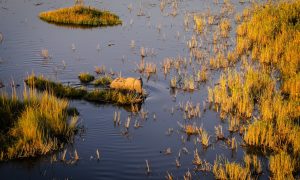
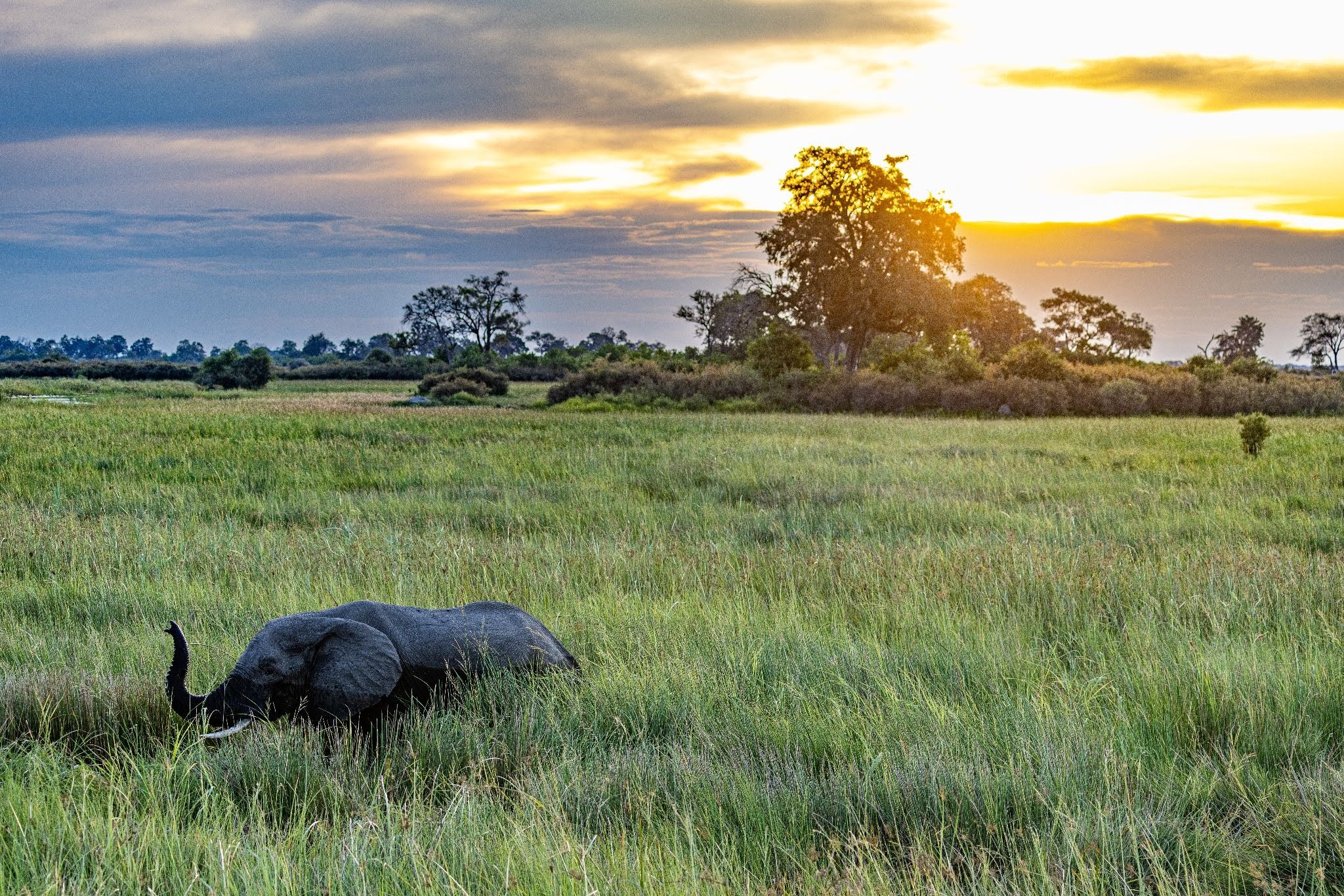
Lone Elephant Crossing – Little Vumbura Camp, Botswana – Nic Turpin
September and October: Intense, Dramatic, Unforgettable
As the dry season reaches its crescendo, September and October deliver some of the most intense wildlife encounters anywhere in Africa. Vegetation is at its sparsest, sightlines are vast, and every level of the food chain converges on the same dwindling waterholes. Along the Chobe and Linyanti rivers, elephant herds of hundreds gather; individuals have been known to drink up to 200 litres of water in a single visit. Predator sightings are highly predictable.
October is the hottest month on the calendar, with temperatures regularly exceeding 35°C. For those who can manage the heat, the rewards are extraordinary. For others, this is the moment to wait for the first rains and the green season’s arrival.
The Green Season (November to April): A Different Kind of Magic
The green season is Botswana’s best-kept secret. Visitor numbers drop, rates at many camps fall considerably, and the landscape transforms into something lush, vivid, and cinematically beautiful. This is not a lesser safari experience; it is simply a different one.
Wildlife Activity in the Wet Season
November signals the start of birthing season for impala, wildebeest, and other herbivores, and where there are newborns, predators follow. The Makgadikgadi Salt Pans host Botswana’s famous zebra migration from November through to April, with thousands of animals crossing the plains in one of the continent’s lesser-known but spectacular wildlife movements. Migratory birds return in vast numbers, making this the finest time of year for birdwatching, with hundreds of species recorded across the Okavango and Chobe.
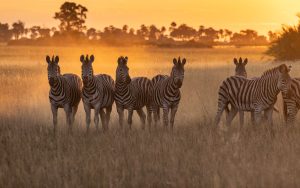
Zebra Herd – Jao Camp, Botswana – Chase Wells
Photography and Landscape
Green season skies are among the most dramatic in Africa; towering cumulonimbus clouds, golden late-afternoon light, and double rainbows over the floodplains create conditions that landscape and wildlife photographers prize. The lush, verdant palette is a stark contrast to the ochre tones of the dry season, and one that rewards a very different photographic approach.
Rates, Availability, and Crowd Levels
Green season pricing at many luxury camps represents a significant saving on peak-season rates, in some cases up to 40%. Availability is generally easier to secure, lodges feel more exclusive, and the overall atmosphere is quieter and more intimate. Note that some remote camps in the Okavango close during the deepest wet months (typically December to February) as access roads become impassable; confirm with your travel specialist before booking.
The Shoulder Months: April, May, and November
If you are looking for the ideal balance of wildlife quality, weather, value, and availability, the shoulder months, particularly April, May, and November, are worth serious consideration. Vegetation is transitioning, wildlife is highly active, prices remain competitive, and the parks feel spacious.
- April brings the impala rut, dramatic male confrontations, predator activity, and thinning vegetation that improves visibility.
- May offers dry-season game viewing without peak-season crowds or rates.
- November heralds the first rains, the arrival of migratory birds, the start of the zebra migration, and a landscape coming back to life.
Best Time to Visit by Region
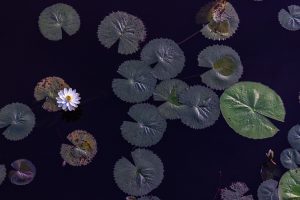
Water Lilies – Okavango Delta – Chase Wells
Botswana is not a single safari experience; it is a collection of distinct ecosystems, each with its own seasonal rhythm. Timing your visit to match both the season and the region will significantly elevate your experience.
Okavango Delta and Moremi Game Reserve
The dry season from June to October is the optimal time, when the annual flood is at its height, mokoro trips are fully operational, and wildlife is concentrated on the islands and floodplains. Water levels are at their highest from July to October.
Chobe National Park
Chobe is exceptional year-round, but the dry season, particularly in September and October, brings the largest concentrations of elephants. The Chobe River frontage is one of the finest wildlife corridors on the continent during this period.
Makgadikgadi and Nxai Pans
The wet season from November to April is when these vast salt pans come into their own, with the zebra migration, calving activity, and birdwatching all peaking. The Central Kalahari Game Reserve is also at its best during the green season, when the desert blooms.
What to Pack for Each Season
Your packing list should be as carefully considered as your itinerary. Botswana’s seasons demand different preparation.
Dry Season (May–October)
- Warm layers for early morning and evening game drives, temperatures can approach freezing in June and July
- Lightweight clothing in neutral tones (khaki, olive, sand) for daytime activities
- Sun protection: hat, sunscreen SPF 50+, UV-protective clothing
- Binoculars and a camera with a long lens
- Sturdy, closed-toe shoes for walking safaris
Green Season (November–April)
- Light, breathable clothing, temperatures frequently exceed 35°C
- Waterproof jacket or poncho for afternoon showers
- High-strength insect repellent and antimalarial medication (consult your physician)
- Polarising lens filter for photography in bright, high-contrast conditions
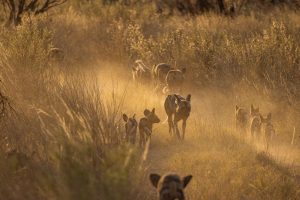
African Wild Dogs – Tubu Tree, Botswana – Chase Wells
Frequently Asked Questions About the Best Time to Visit Botswana for Safari
When is the absolute best time to go on safari in Botswana?
The dry season from May to October is generally considered the best time to visit Botswana for a safari. Wildlife is easiest to spot as animals gather around shrinking water sources, vegetation is sparse, and the Okavango Delta is in full flood. Many experienced safari travellers regard May and early June as the sweet spot; game viewing is excellent, and the parks have not yet reached peak-season capacity.
Is Botswana worth visiting in the green season?
Absolutely. The green season from November to April offers a genuinely different and equally rewarding safari experience. Expect lush landscapes, newborn wildlife, the Makgadikgadi zebra migration, exceptional birdwatching, and significantly lower rates. The wet season is particularly well-suited to photographers and those seeking a more exclusive, uncrowded experience.
What is the weather like in Botswana in July?
July sits at the heart of Botswana’s dry winter season. Days are warm and sunny, typically reaching 22–26°C, while nights can be very cold; temperatures occasionally drop below freezing in certain areas. There is virtually no rainfall. July is one of the busiest months in the parks, so early booking is strongly recommended.
When is the Okavango Delta at its best?
The Okavango Delta is at its most spectacular from July to October, when the annual floodwaters from Angola are at their peak. During this period, the delta transforms into an extraordinary network of channels and islands, supporting exceptional concentrations of wildlife and making water-based activities, including mokoro trips and boat safaris, fully accessible.
Is malaria a risk in Botswana?
Malaria is present in Botswana, particularly in the northern regions where most safari areas are located. The risk is highest during the wet season (November to April) when mosquito activity increases. Antimalarial prophylaxis is strongly recommended; consult a travel health physician well in advance of your trip. During the dry season, mosquito activity is significantly reduced.
How far in advance should I book a Botswana safari?
For peak season travel (June to October), booking six to twelve months in advance is advisable, particularly for the most sought-after camps in the Okavango Delta and Chobe. Green season and shoulder travel affords more flexibility, though popular properties fill quickly regardless of the season. A specialist safari consultancy can advise on availability and the right combination of camps for your travel dates.
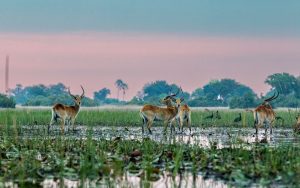
Lechwe – Jao Camp, Botswana – Chase Wells
Final Thoughts: Choosing Your Moment in Botswana
Botswana does not have a bad season, it has different seasons, each with its own character and rewards. The dry months from May to October deliver the game viewing that safari dreams are made of: vast herds at floodlit waterholes, predators hunting in open grasslands, and the extraordinary spectacle of the Okavango in full flood. The green months offer something equally compelling: a quieter, lusher, more intimate encounter with a landscape in renewal.
The best time to travel to Botswana for safari is, ultimately, the time that aligns with what matters most to you, whether that is wildlife density, birding, photography, budget, or simply the experience of having a wilderness largely to yourself. To understand the full scope of what Botswana offers before choosing your season, explore our Botswana Safari: The Ultimate Guide for Luxury Travel. SafariScapes works with each client to match the right destination, the right camp, and the right season to create a journey that is distinctly their own.
Ready to plan your Botswana safari?
Speak to a SafariScapes specialist and let us design your perfect journey, timed to the season, tailored to what moves you.
Leave a Reply